A sustainable recovery week is not a perfect calendar of stretching, rolling, hydration, and early bedtimes. It is a repeatable rhythm that helps you feel more comfortable between walks, runs, lifting sessions, Pilates classes, and ordinary life.
The useful version is flexible: a few short practices, one or two longer wind-downs, and enough permission to do less when your body is already carrying plenty.
Persistent, severe, unexplained, or worsening pain and injury diagnosis or treatment should be handled by a qualified healthcare professional in line with applicable clinical standards and local regulations.
The short version
A good weekly recovery rhythm has three layers: daily low-effort care, activity-specific support, and true rest. Daily care might be five minutes of easy mobility, relaxed breathing, or light walking. Activity-specific support responds to what you did that day, such as calves after a hilly walk, hips after a run, or shoulders after upper-body lifting. True rest means leaving space where you are not trying to improve anything.
Most active women do not need a complicated recovery protocol for every workout. They need a menu they can actually repeat when energy is low, time is tight, and the floor is not magically clear. The goal is to finish the week feeling like your body was listened to, not managed like a project.
What recovery should do during an ordinary active week
Recovery is the bridge between the movement you enjoy and the movement you want to keep enjoying. It can support comfort, mobility, and a calmer transition out of training mode, but it is not a guarantee of pain relief, faster fitness gains, or injury prevention.
Think of it as body maintenance with a kind tone. After a walk, you may want easy calf and foot attention. After lifting, your body may appreciate slower movement and a warm shower more than another intense session. After running, a gentle hip and ankle routine can help you check in with areas that often feel loaded. After Pilates, wrists, neck, and hip flexors may ask for quieter care.
The most repeatable plan is built around questions, not rules: What did I do today? Where do I feel worked? How much energy do I have left? What would make tomorrow’s movement feel more inviting?
A sample weekly rhythm for walkers, lifters, runners, and Pilates lovers
This is not a prescription. It is a practical example of how a sustainable recovery week can look when your movement is varied and your schedule has normal interruptions.
Monday: Lift day plus a five-minute downshift
After a strength session, keep recovery simple. Walk around for a few minutes, then do slow hip circles, chest opening against a wall, and gentle breathing on your back. If your legs feel heavy, skip aggressive pressure and choose easy range of motion instead.
The point is to signal that the workout is complete. You are not trying to stretch every muscle you used. You are helping your nervous system and attention move out of effort mode.
Tuesday: Walk day with calves, feet, and hips
After a longer walk, spend one minute noticing your feet, calves, and hips before you decide what to do. Try ankle circles, a relaxed calf stretch against a wall, and a seated figure-four shape if it feels comfortable.
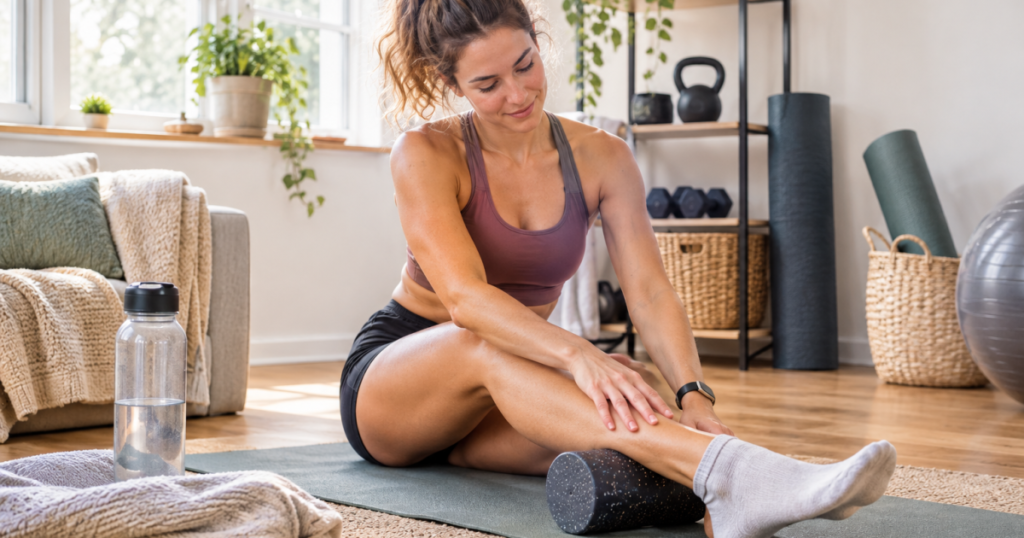
If you like using small tools, this is where a ball, soft roller, or stretch strap may fit. Use pressure that lets you breathe normally. More intense is not automatically more useful, especially when you want the habit to last.
Wednesday: Pilates day with wrists and upper back
Pilates can leave subtle fatigue in places that do not always get attention: wrists, forearms, neck, ribs, and the muscles around the shoulder blades. A recovery finish might be wrist circles, gentle forearm massage with your opposite hand, side breathing, and a supported child’s pose.
If a strap helps you stay relaxed during hamstring or shoulder mobility work, the Manduka UnfoLD Yoga Strap is one example of the kind of simple aid that can make range-of-motion practice feel less fussy. The tool matters less than whether it helps you stay calm and consistent.
Thursday: Rest day that still includes movement
A rest day does not have to mean staying still all day. It can include an easy neighborhood walk, a few mobility snacks between desk sessions, or ten quiet minutes on the floor. Keep the intensity low enough that you finish feeling more settled, not freshly challenged.
This is also a good day for the unglamorous recovery supports: meals, sleep, hydration, clean socks, and not adding an extra workout because you feel behind. Sometimes the most sustainable choice is not doing more.
Friday: Run day with a gentle landing
After a run, give your body a gradual landing. Walk until your breathing feels easier, then check ankles, calves, quads, hips, and lower back. Pick two areas rather than trying to address everything.
A simple sequence could be standing calf stretch, half-kneeling hip flexor stretch, and relaxed breathing with your feet on the floor. If you feel keyed up after evening runs, add a warm shower or low-light wind-down before bed.
Saturday: Longer movement, longer recovery
This might be a hike, long walk, longer run, heavier lift, or an energetic class. Match the recovery window to the size of the effort. Instead of cramming everything into the first ten minutes, spread support across the day: easy walking after, a short mobility session later, and a calmer evening routine.
For tool-based pressure, start conservatively. A soft foam roller can feel more approachable when you want broad contact rather than pinpoint intensity. The OPTP PRO-Roller Soft is a useful reference point for readers who prefer gentler rolling over firm, textured pressure.
Sunday: Reset without over-planning
Use Sunday to notice patterns, not grade yourself. Did your calves feel tight after every walk? Did lifting days need more sleep? Did Pilates feel better when you warmed up your wrists first? These clues help you adjust next week without turning recovery into homework.
A good reset can be as small as laying out a mat, washing your water bottle, charging any electronic tool you actually use, or choosing three recovery moments for the week ahead.
How to adjust the week when your body is talking louder
Some weeks ask for less ambition. If stiffness is higher than usual, reduce intensity before you add more recovery steps. You might shorten a run, lower lifting volume, take a flatter walking route, or choose a gentler Pilates class. Recovery works better when it is paired with honest load management.
Use a simple traffic-light check:
- Green: ordinary muscle fatigue, mild stiffness, and steady energy. Keep your planned movement and add short recovery touches.
- Yellow: heavier soreness, poor sleep, or low motivation that feels physical. Lower the effort and choose gentle mobility, warmth, or rest.
- Red: sharp, worsening, unusual, or persistent symptoms. Step back from self-directed routines and seek qualified guidance for assessment and care.
This approach keeps you from using recovery tools to push through messages your body is already making clear.
Small recovery menus for different energy levels
A weekly rhythm becomes easier when you stop asking, “What should I do?” at the exact moment you are tired. Build a short menu instead.
When you have two minutes
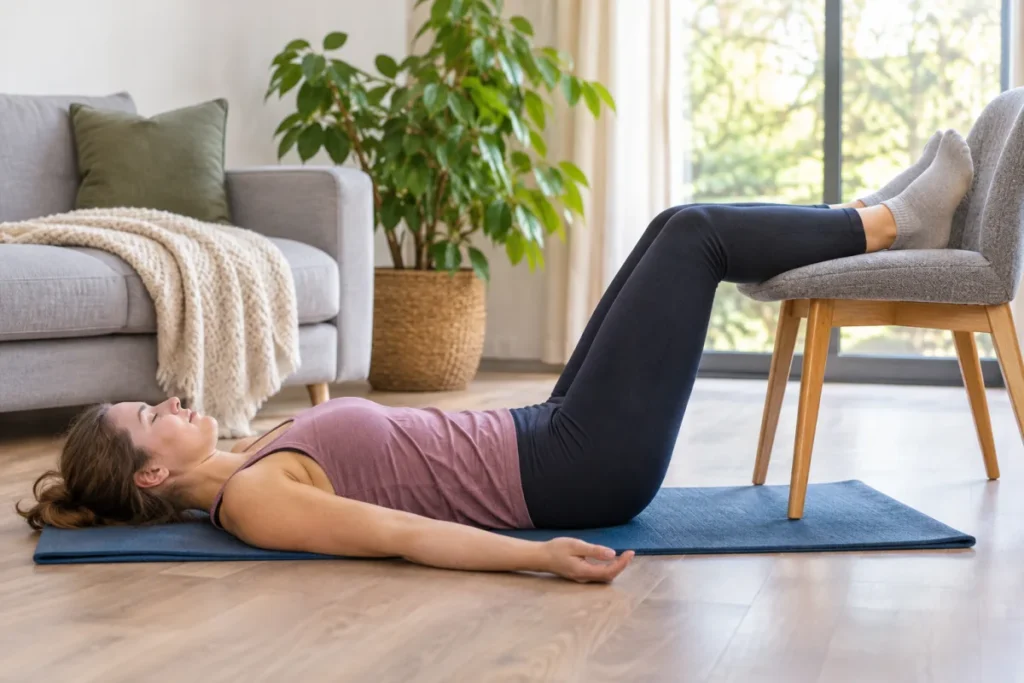
- Put your legs up on a chair and take ten slow breaths.
- Do ankle circles and shoulder rolls while dinner heats.
- Stand at a wall for a gentle calf stretch on each side.
When you have five to eight minutes
- Walk slowly around your home, then stretch calves and hips.
- Do cat-cow, child’s pose, and relaxed side breathing.
- Use light pressure on one tight-feeling area, then stop before it becomes a project.
When you have 15 minutes
- Combine easy mobility, one tool-based technique, and quiet rest.
- Choose a guided stretching session that feels restorative rather than demanding.
- Finish with a clear transition: dim lights, put the tool away, and let recovery be complete.
If you are not sure which type of tool fits your pressure preference, space, or routine style, the Home Recovery Tool Finder can help you narrow the choices without turning a simple habit into a shopping marathon.
Helpful questions
Do I need to recover after every workout?
You do not need a formal session after every workout. A short cool-down, a few mobility movements, or an earlier bedtime can count. The right amount depends on the effort, your schedule, and how your body feels over the next day or two.
Is soreness a sign that recovery is working?
Soreness is not a scorecard. You can have a useful training week with little soreness, and you can feel sore even when you did nothing wrong. Track comfort, energy, sleep, and willingness to move again rather than chasing soreness or trying to erase it immediately.
Should walking, lifting, running, and Pilates all have different recovery routines?
They can share the same foundation: gentle movement, breathing, rest, and enough food and sleep to support your life. The difference is emphasis. Walkers may focus on feet and calves, runners on calves and hips, lifters on the areas trained that day, and Pilates lovers on wrists, spine, hips, and shoulders.
Main lessons
A sustainable weekly recovery rhythm is built from repeatable choices, not a perfect routine. Match your care to the activity, keep pressure comfortable, and let rest be part of the plan rather than something you earn only after doing enough.
The best week is the one you can live with: movement you enjoy, recovery you will actually do, and enough body awareness to adjust before small stiffness becomes the only thing you notice.